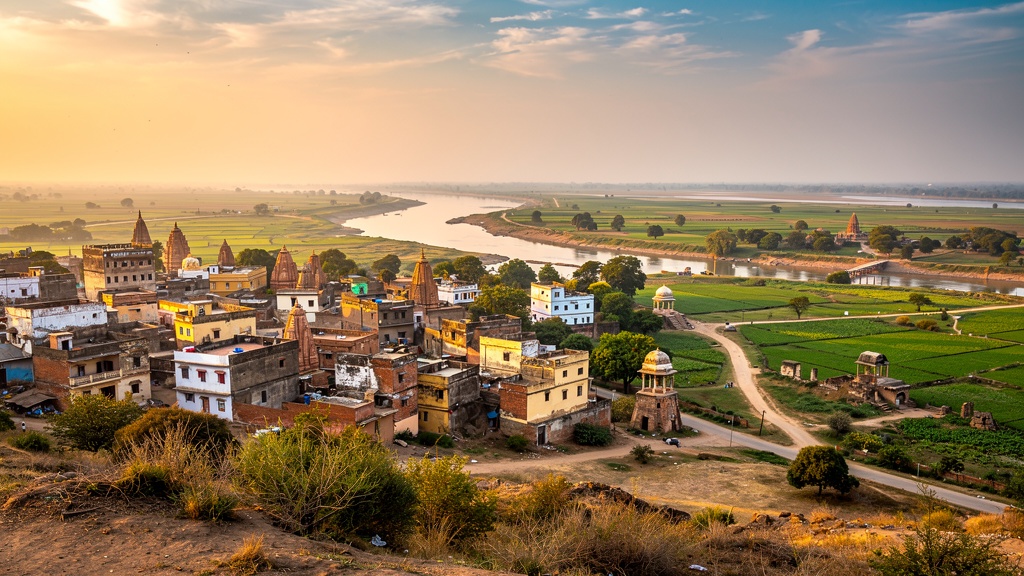
About Hastinapur
Understanding the layered heritage of one of India's most significant ancient cities.
Hastinapur is a city of remarkable depth — a place where mythology, history, faith, and nature converge. This page separates the strands of its heritage so you can appreciate each on its own terms.
We clearly distinguish between the epic traditions and the archaeological evidence, so you can understand both.

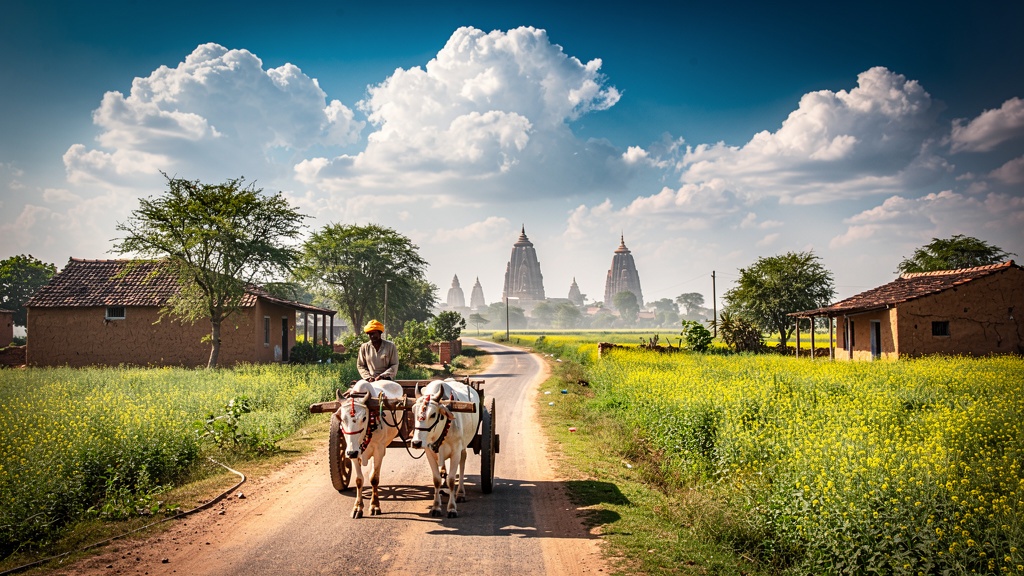
In the great Indian epic, the Mahabharata, Hastinapur was the capital of the Kuru Kingdom, ruled by the ancestors of both the Kauravas and Pandavas. The city was founded by King Hastin, an ancestor of the lunar dynasty, after whom it was named Hastinapur — literally "the city of Hastin" or "the city of elephants."
The epic describes Hastinapur as a magnificent city with grand palaces, bustling markets, and a thriving civilisation. It was here that the Pandava brothers grew up, faced countless challenges, and eventually fought the great Kurukshetra War for the throne.
Key mythological sites associated with the epic include Pandeshwar Temple (said to have been built by the Pandavas), Karna Temple, Vidur Tila (the mound associated with Vidura, the wise minister), and Draupadi Ghat on the banks of the ancient Ganges.
The epic also recounts a devastating flood that led to the relocation of the capital to Kaushambi — a detail that archaeological findings strikingly corroborate.
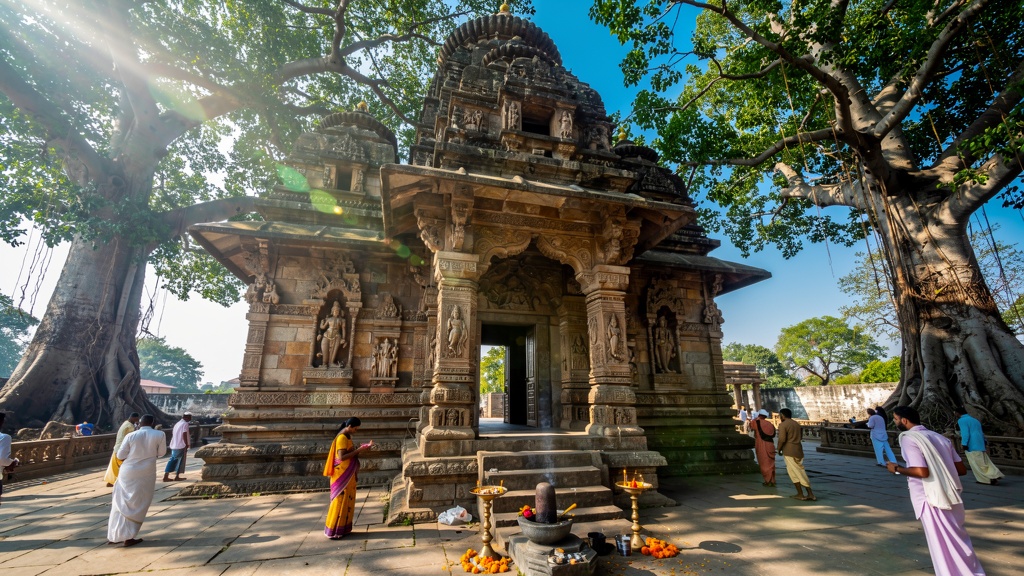
Dedicated to Lord Shiva, this ancient temple is traditionally believed to have been established by the Pandava brothers during their exile. The lingam here is said to have been installed by Bhima, the second Pandava. The weathered stone architecture evokes a sense of deep antiquity.
A temple dedicated to Karna, the tragic hero of the Mahabharata known for his generosity and loyalty. It is a modest but significant site for devotees and epic enthusiasts.
An archaeological mound identified with Vidura, the wise prime minister of Hastinapur. This site offers a tangible connection to the epic narrative and is also of archaeological interest.
The river bank site associated with Queen Draupadi. Annual fairs (melas) are held here, drawing pilgrims and locals who re-enact parts of the epic tradition.
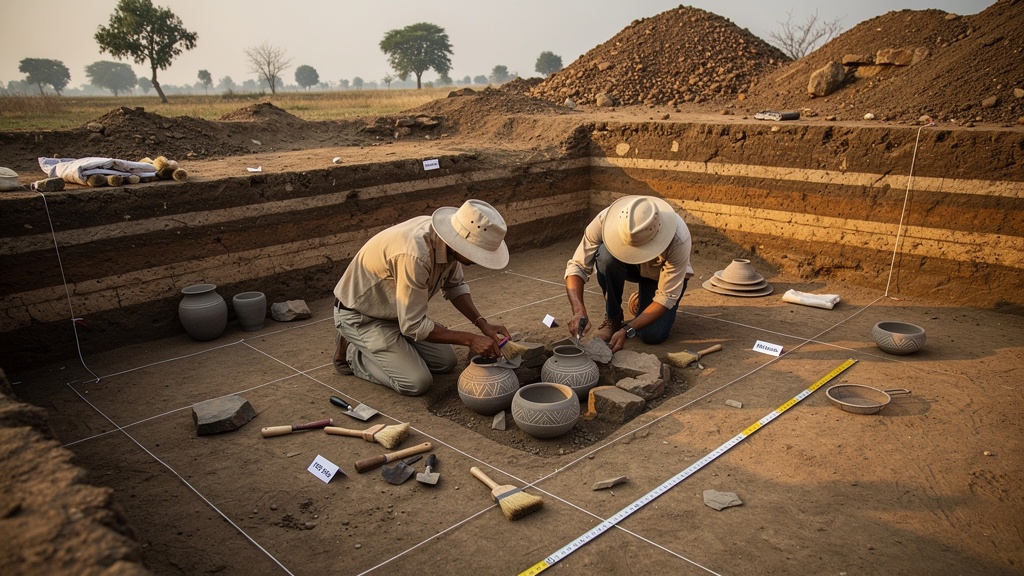
Systematic archaeological excavations at Hastinapur were conducted by the Archaeological Survey of India (ASI) under Dr. B. B. Lal in the 1950s. The findings were groundbreaking and continue to shape our understanding of ancient Indian history.
The most significant discovery was the presence of Painted Grey Ware — a distinctive pottery tradition dating from approximately 1200 BCE to 600 BCE. This culture is widely associated with the later Vedic period and, by many scholars, with the world of the Mahabharata.
Perhaps the most striking finding was evidence of repeated flooding of the ancient Ganges, which eventually led to the abandonment of the settlement. This aligns remarkably well with the Mahabharata's account of the city being washed away by a flood, forcing the relocation of the capital to Kaushambi.
Above the PGW layers, excavators found evidence of Kushan (1st–4th century CE) and Gupta (4th–6th century CE) period occupation, indicating that the site was continuously inhabited or re-settled long after the epic period.
| Period | Date | Significance |
|---|---|---|
| Painted Grey Ware | ~1200–600 BCE | Earliest settlement; associated with Mahabharata period |
| Northern Black Polished Ware | ~600–200 BCE | Continued habitation; Mauryan influence |
| Kushan Period | 1st–4th Cent. CE | Buddhist and urban expansion |
| Gupta Period | 4th–6th Cent. CE | Classical age; temple building |
| Medieval Period | 8th–16th Cent. | Jain and Hindu patronage |
| Modern Era | 20th Cent. Onward | ASI excavations; growing pilgrimage |
Hastinapur is one of the most important Jain pilgrimage destinations in North India.
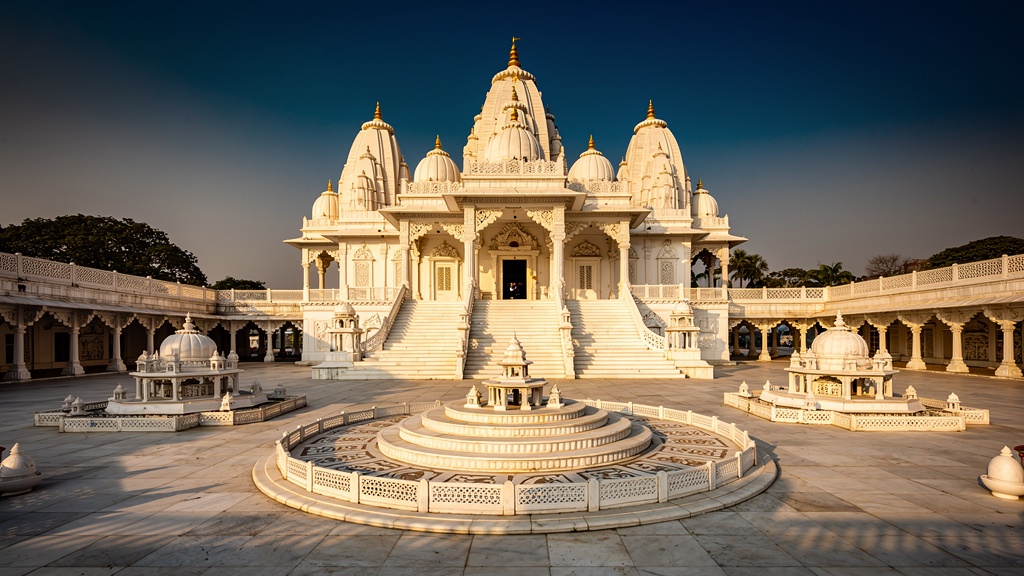
Hastinapur holds a supremely sacred place in the Jain tradition. It is believed to be the birthplace of three Tirthankaras — the revered spiritual teachers of Jainism:
The town is home to several magnificent Jain temples built predominantly in white marble, including the Digambar Jain Bada Mandir, Jambudweep (with its famous cosmological model), Kailash Parvat, and Ashtapad Temple.
These sites attract thousands of Jain pilgrims from across India and abroad, especially during major Jain festivals. The temples are maintained by the Digambar Jain community and are noted for their intricate architecture and spiritual ambiance.
Note: Visitors are requested to respect religious customs — remove footwear before entering temples, dress modestly (covering shoulders and knees), and avoid photography inside sanctum sanctorums.
Hastinapur also holds significance in Sikh history.
The village of Saifpur (also spelled Saifpura), near Hastinapur, is associated with Bhai Dharam Singh — one of the Panj Pyare (the Five Beloved Ones) who were the first initiates into the Khalsa order by Guru Gobind Singh in 1699.
The Gurdwara Bhai Dharam Singh at Saifpur commemorates his birthplace and legacy. While less frequented than the Jain and Hindu sites, it is an important stop for Sikh pilgrims and those interested in Sikh history.
The site is modest and rural, reflecting the simplicity of its surroundings. It is best visited as part of a broader exploration of the Hastinapur region.
Ready to visit these remarkable sites? Get detailed information on each attraction, including timings, location, and tips.
View All Attractions →